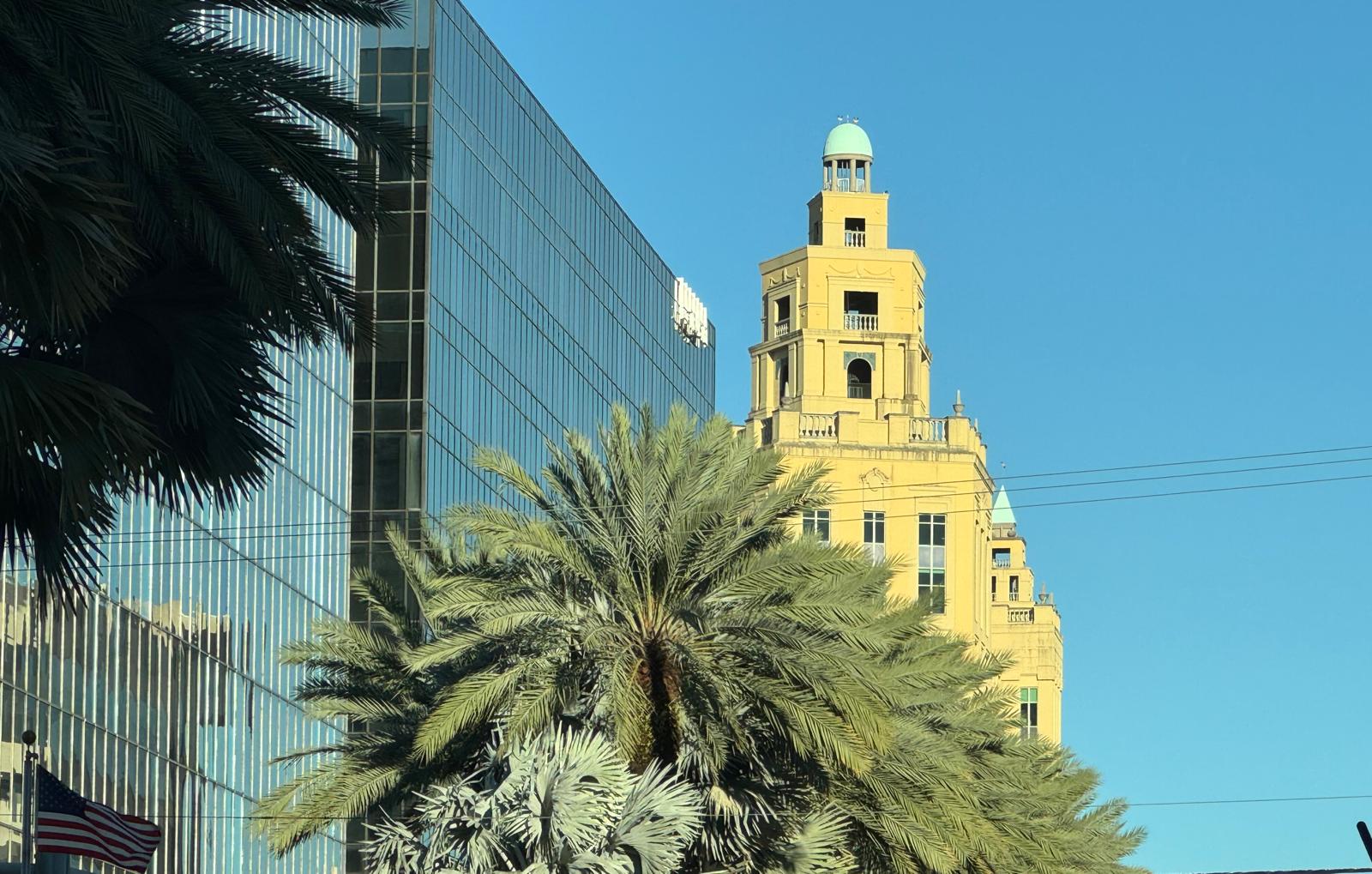
There are cities you choose for convenience, and others that choose you out of affinity. When I opened my office in Coral Gables in 2001, I wasn't looking for a prestigious address; I did it because I understood that this city and the activity to which I've dedicated my life—buying, valuing, and selling companies—share the same vocation. Coral Gables was conceived, from its very first design, as a place where businesses flourish. A quarter of a century later, I remain convinced that there is no better setting in South Florida for anyone looking to start, invest in, or sell a company.
These lines are a portrait of the city that has been my professional home for more than two decades, and an invitation to understand why so many Latin American and Hispanic entrepreneurs choose it as a starting point towards the US market.
A dream city, not improvised
Coral Gables didn't grow by chance. It was born from the imagination of a single man, George Merrick, who in the 1920s designed one of the first "planned cities" in the United States. Merrick didn't want just another real estate development: he wanted a habitable work of art. He named it The City Beautiful —the Beautiful City— and imposed upon it an aesthetic coherence that still distinguishes it from everything that surrounds it today.
From that vision came the winding streets lined with centuries-old trees, the Mediterranean-inspired architecture, the plazas and fountains, the Venetian Pool carved into the coral rock, the Biltmore Hotel with its distinctive tower, and the famous Miracle Mile, the commercial heart of downtown. Merrick also uttered a phrase that time would turn into a prophecy: he dreamed that his city would be "a gateway to Latin America"A century later, that door not only opened: it became one of the busiest in the hemisphere.
For those who work in real estate brokerage, that legacy matters. A city with clear rules, a strong identity, and pride in its surroundings is a city that protects the value of what is built within it. A buyer of a business in Coral Gables isn't just acquiring cash flow; they're acquiring a location that the urban design itself protects from deterioration.
The business ecosystem: figures that speak for themselves
Beauty would be merely anecdotal if it weren't accompanied by economic substance. And here, Coral Gables surprises even those who know it well. Within its just over 13 square miles, more than 10.000 businesses, supported by over 11 million square feet of commercial spaceNearly 40% of the city's revenue comes from the business sector, a fact that explains why the municipal government takes care of its businesses with unusual diligence.
But its most distinctive feature is its international character. Coral Gables is home to more than 120 multinational companies who manage their global or regional operations from here, mostly focused on Latin America. These are joined by approximately 20 consular and commercial offices from countries like Spain, Colombia, Italy, and many others. It's difficult to find such a density of international corporate decision-making in such a small area.
The list of names is impressive. Bacardi established its North American headquarters here; Del Monte Fresh Produce manages its global business from the city; Diageo and Mondelez chose Coral Gables as their Latin American headquarters. Over the years, they have been joined by companies such as Tiffany & Co., Chopard, Terumo, American Airlines, Apple, and a long list of financial services firms, law firms, technology companies, and investment firms. And the trend continues: recently, City National Bank of Florida—one of the state's largest banks—decided to consolidate its headquarters in the city, confirming a trend of corporate relocation that has transformed South Florida into a magnet for capital and talent.
Why Coral Gables is fertile ground for business
When a client asks me what makes this city such a favorable place to operate, my answer is based on concrete factors, not impressions:
No state income tax. Florida does not tax personal income, and that fact alone radically changes the profitability equation for a business owner, a relocated executive, or a foreign investor. It is often the first argument that convinces.
Strategic location. Coral Gables is minutes from Miami International Airport and the Port of Miami (PortMiami), the two major gateways for trade between the Americas. For a company looking south, there is no better logistics platform.
Bilingual and qualified human capital. More than half of the residents are fluent in a second language, and nearly 70% hold a college degree—well above the county average. The University of Miami, the city's largest employer, constantly feeds this talent pool. For a business serving Hispanic clientele and Latin American markets, having staff who are fluent in both English and Spanish is an invaluable asset.
Infrastructure and stability. Coral Gables has been recognized as a "Smart City" for its technological and service infrastructure, and enjoys a reputation as a safe, orderly community with a walkable downtown. Unlike other areas of Florida, its economy does not depend on the seasonal fluctuations of tourism: almost as many people work here as there are residents.
Quality of life. This is no small detail. The city has been ranked among the most beautiful and livable in the country in media rankings such as USA Today y ForbesExecutives who choose to live here tend to establish their businesses here as well. Beauty in Coral Gables is also a business selling point.
The Hispanic gateway to the United States
This last point is, for me, the heart of the matter. For over twenty-five years, I have guided buyers and investors from across Latin America into the U.S. market, many of them through investment visas such as the E-2, L-1, or EB-5. And I have found that Coral Gables offers something that no other city brings together so naturally: the legal and economic stability of the United States, combined with an environment where the Spanish language, Latin culture, and the business networks of the hemisphere feel right at home.
Here, a Venezuelan, Colombian, Argentinian, or Mexican entrepreneur doesn't feel like a foreigner. They find banks that understand their situation, lawyers and accountants who speak their language, consulates just a few blocks away, and a community that has already walked the same path. Acquiring an established business in this city isn't just a financial transaction: it's a smart and proven way to put down roots in the country on the right foot.
A city made for buying and selling companies
I'm going back to the beginning. I chose Coral Gables in 2001 because I sensed that its destiny and mine were aligned, and time has proven me right. Every valuation I prepare, every company I help transition, benefits from being in a market where demand is real, the environment is stable, and the prestige of the management adds value when negotiating.
If you own a business in Coral Gables or South Florida and are considering selling, this is an ideal time and place to do so with professional guidance. And if you're an investor looking to enter the U.S. market through an existing company, you'll be hard-pressed to find a better opportunity than the one George Merrick envisioned a century ago.
At Business in Florida, we've been helping businesses cross that threshold for over two decades. We'd be happy to guide you through it.
Businesses in Florida — 2000 Ponce de León Blvd., Coral Gables, FL 33134. Business brokerage, commercial real estate, and investment visa consulting. Contact: (786) 486-3615 Alfred@negociosenflorida.com • BusinessInFlorida.com